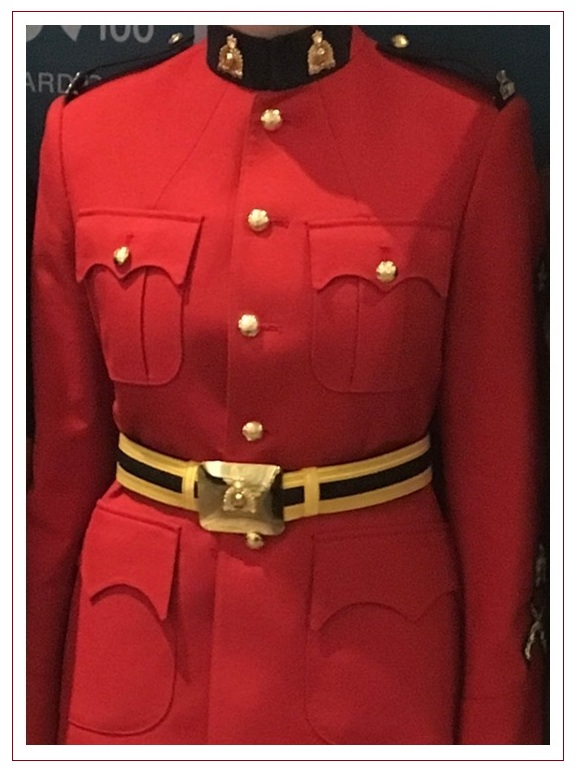
Recommendations:
A Call for Institutional Transparency
Disclaimer: These recommendations are offered in an exploratory, academic tone. They do not allege wrongdoing or assign blame to any individual, group, or organization. They follow from the documentary record assembled through this research and are intended to identify questions that may benefit from further institutional transparency. Nothing in these recommendations is intended to impute wrongdoing to any individual. All claims are based on ATIP documents and sources cited on this website.
The research presented on this website identifies questions arising from the documentary record that the RCMP has not yet been formally asked to address publicly. The following recommendations are offered in that spirit — not to diminish the contributions of those who have served the pipes-and-drums program in good faith, but to encourage transparency about the legal and institutional framework governing the RCMP's most significant national symbol — the Red Serge. Each recommendation follows directly from the findings of this research.
In the interest of transparency, it is recommended that the RCMP Commissioner release all relevant correspondence written between January 1 and July 1, 1998, by those involved in the formation of the pipes and drums program, including those related to the SEC meeting of April 15, 1998, the minutes of the Clothing and Equipment Design Committee (CEDC) dated February 25, 1998, and the objections raised by Divisional Staff Relations Representatives (DSRRs).
Releasing these founding documents would provide the public and institutional stakeholders with a clear picture of how the program was established, what considerations were raised at the time, and what guidance, if any, was provided on the question of civilian participation. Transparency at this foundational level would assist any subsequent institutional review and would demonstrate the RCMP's commitment to openness on a matter of public interest.
The RCMP should conduct a formal internal review of the 1998 Senior Executive Committee decision and the legal framework within which the pipes-and-drums program and civilian volunteers was established.
The April 15, 1998 Commissioner's Record of Decision, released by the RCMP under the Access to Information and Privacy Act, authorized a purpose-built Pipes and Drums tunic and an official RCMP tartan. It did not authorize civilian volunteers to wear the RCMP uniform. That distinction is the starting point for this recommendation.
Department of Justice Legal Services were present at the SEC meeting on April 15th, 1998, but the documentary record assembled through this research does not reveal whether RCMP Legal Services was consulted before the decision was made. It does not identify a formal legal opinion addressing whether the Commissioner had the statutory authority to approve a modification to the significant uniform without Ministerial involvement. And it does not disclose whether the question of civilian participation in RCMP uniform was ever formally put to Legal Services for an opinion.
The Minister of Public Safety should be formally briefed on the question of Ministerial approval in connection with the 1998 pipes-and-drums decision.
Section 27(1) of the Royal Canadian Mounted Police Regulations, 2014 places the design of the significant uniform of the Force under the approval authority of the Minister. The research presented on this website has not located any document confirming that the Minister was consulted before the Red Serge was modified in 1998 to accommodate the pipes-and-drums program. That is not a finding about intent — it is an observation about the documentary record.
When women were first admitted to the RCMP as Regular Members in 1974, the modification of the significant uniform to accommodate their service was handled through a formal process. Order in Council P.C. 1975-354, dated February 25, 1975, confirms that the Governor in Council formally approved the significant uniform for women Regular Members of the Force. The documentary record does not identify an equivalent process in connection with the 1998 modification. The Minister of Public Safety should be made aware of this gap in the documentary record and given the opportunity to consider whether any further steps are appropriate. The integrity of the Ministerial approval process is an important element of federal governance — and transparency about how that process was engaged in 1998 is a reasonable institutional expectation.
RCMP Legal Services should produce a formal written policy document addressing the framework governing civilian use of the significant uniform in ceremonial contexts.
The question of whether, and under what conditions, civilian volunteers may participate in RCMP-affiliated ceremonial programs while wearing the significant uniform is one that the documentary record available through the Access to Information and Privacy Act has not answered. A clearly documented policy framework — one that addresses the relevant provisions of the RCMP Act, the Royal Canadian Mounted Police Regulations, 2014, and Treasury Board policy on Crown property — would provide clarity for volunteers, the public, and the institution itself. That document should be placed on the institutional record and made available to the Minister of Public Safety.
The RCMP should publicly document the security vetting standards applied to civilian volunteers in pipes-and-drums bands who perform at official ceremonies.
Pipes-and-drums bands affiliated with the RCMP have performed at official ceremonies in proximity to protected persons at high-security events in Canada and abroad. In those contexts, civilian volunteers in RCMP Red Serge are visually indistinguishable from sworn RCMP members in the same uniform. The RCMP has indicated that civilian musicians are subject to security screening. Publicly documenting what vetting standards apply to civilian volunteers in the pipes-and-drums program, and how those standards are administered, would assist transparency and provide assurance to the public that appropriate measures are in place.
The RCMP should formally evaluate the pipes-and-drums program against its commitments under the Canadian Multiculturalism Act and its own diversity and inclusion policies.
The Canadian Multiculturalism Act, R.S.C. 1985, c. 24 (4th Supp.), requires federal institutions to reflect the diversity of Canadian society in the public face they present to Canadians and to the world. The RCMP, as a federal institution, operates within that framework, and its own diversity and inclusion policies reflect those obligations. The pipes-and-drums program, as this research has documented, draws from one cultural tradition — Scottish Highland military culture — that has no documented roots in the founding of the North-West Mounted Police. A serving RCMP member raised the question of equitable cultural representation at the moment the program was being established in 1998. The documentary record does not show that question was formally addressed.
A formal evaluation of whether the pipes-and-drums program reflects the RCMP's diversity commitments and its obligations under the Canadian Multiculturalism Act would be consistent with the Force's stated values. That evaluation should be documented and its findings made available to the Minister of Public Safety.
A formal review should be conducted of federal resources expended in support of RCMP-affiliated pipes-and-drums bands, to ensure that those expenditures are properly documented and authorized.
The pipes-and-drums program affiliated with the RCMP has, since its establishment in 1998, involved the use of public resources in various forms — including RCMP administrative support and the issuance of Crown property in the form of RCMP uniforms and associated kit to civilian volunteers. Ensuring that those expenditures are properly documented and authorized is consistent with the requirements of the Financial Administration Act and Treasury Board policy on Crown property. A formal review that examines whether each category of resource use was properly authorized and documented would assist transparency and provide assurance that public resources have been managed appropriately. The findings of that review should be made available to the Minister of Public Safety and the President of the Treasury Board.
The RCMP should formally assess and publicly document the duty of care it owes to civilian volunteers who perform in RCMP uniform at public ceremonies.
Civilian volunteers in RCMP-affiliated pipes-and-drums bands perform regularly at high-profile public ceremonies across Canada and abroad, dressed in the Red Serge — a uniform that is among the most recognized symbols of state authority in the country. They are unarmed, do not hold police powers, and have not received the training that sworn RCMP members receive as part of Basic Recruit Training at Depot Division. The question of what duty of care the RCMP owes to those volunteers, and what safety measures are in place when they perform in uniform at public events, has not been publicly documented.
Events involving uniformed personnel at public ceremonies carry inherent security considerations. The RCMP should formally assess what safety measures apply to civilian volunteers performing in its uniform, what risk assessments have been conducted, and how those assessments are documented. That documentation should be placed on the institutional record and made available to the public in appropriate form. Volunteers who participate in the program, and their families, are entitled to know that their safety has been formally considered and that appropriate measures are in place.
If the RCMP wishes to maintain a pipes-and-drums tradition, it should establish that tradition on a transparent and well-documented foundation.
Nothing in this research argues that ceremony has no place in the life of the RCMP. Institutions benefit from traditions. The question this research raises is not whether the RCMP should have a pipes-and-drums program — it is whether the program as it has operated since 1998 is supported by the documentation that good governance requires. If the RCMP's leadership determines, following the review recommended above, that a pipes-and-drums tradition serves a legitimate institutional purpose, that tradition should rest on a foundation that is transparent, properly authorized, and consistent with the Force's own values.
At minimum, that foundation would include formal Ministerial approval for any civilian use of the significant uniform; a clearly documented policy framework under the RCMP Act and the Royal Canadian Mounted Police Regulations, 2014; a distinct uniform for civilian musicians that does not replicate the Red Serge worn by sworn RCMP members; security vetting standards for civilian musicians that are formally documented; and a program composition that reflects the diversity of the Force and is consistent with the RCMP's obligations under the Canadian Multiculturalism Act.
The Musical Ride demonstrates that the RCMP's ceremonial culture can be composed entirely of sworn Canadian police officers, drawn from every corner of the country's diversity, performing a tradition with genuine historical roots. That is the standard. It is achievable — and it is what Canadians deserve from the institution that serves them.
A formal review should be conducted of honours and recognition granted to individuals associated with RCMP-affiliated pipes-and-drums bands, with the Governor General's office involved in that review process where appropriate.
Since the establishment of the pipes-and-drums program in 1998, individuals associated with RCMP-affiliated bands have on various occasions been recognized through awards and citations. Nothing in this recommendation suggests that any individual received recognition improperly or in bad faith. The question is solely whether the institutional framework within which those recommendations were made is supported by the documentation that good governance requires.
The Governor General of Canada, as the viceregal representative of the Crown and the source of honours conferred under the Canadian honours system, has a direct institutional interest in ensuring that awards and citations granted in connection with RCMP ceremonial programs rest on a properly documented foundation. Where appropriate, the Governor General's office should be informed of the questions this research raises, so that the integrity of the Canadian honours system can be assured. This recommendation seeks only to ensure that the institutional framework within which recognitions were made meets the standard of transparency and proper authorization that Canadians are entitled to expect.
The RCMP should publicly document the policy framework, if any, governing the acceptance of honoraria by civilian volunteers who perform in RCMP uniform at public events.
Ceremonial performances involving RCMP-affiliated bands occur at a wide range of public events across Canada. In some circumstances, organizers offer an honorarium or performance fee to bands or individual musicians. Where civilian volunteers in RCMP uniform receive compensation for public performances, questions arise about how those arrangements are governed, how they are administered, and whether the policy framework addressing them has been publicly documented.
The following questions are offered in the interest of transparency and good governance, and are not intended to suggest impropriety on the part of any individual or organization:
- Policy documentation. Is there a published policy governing the acceptance of honoraria by civilian volunteers performing in RCMP uniform? If so, that policy should be made publicly available.
- Public understanding. Many event organizers request performers in Red Serge. Do those organizers fully understand that performers may be civilian volunteers rather than serving RCMP members? Clearer public information about the composition of these bands would assist public understanding.
- Opportunity and fairness. Are there policies governing when civilian volunteers may perform at public events in RCMP uniform, and how those opportunities are allocated? Documenting those policies would assist transparency.
- Safety considerations. When civilian volunteers perform in RCMP uniform at public events, what safety measures are in place? Is the duty of care owed to those volunteers formally documented?
These questions are posed to encourage transparency about how ceremonial activities involving one of Canada's most recognized national symbols are organized and governed. Clarification would assist public confidence and proper oversight, while recognizing the valuable contributions of volunteer musicians.