Disclaimer: This page is written in an academic tone. It does not allege wrongdoing or assign blame to any individual, group, or organization. It seeks only to examine the evidentiary and analytical basis for claims made in support of civilian participation in RCMP pipes and drums ensembles. All claims are grounded in the research literature and documentary record cited herein. Nothing on this page is intended to impute wrongdoing to any individual.
An Essay:
Community Policing
Three Arguments
Argument 1: Community Policing Claims Are Unsubstantiated
In documents made public under the Access to Information Act the pipes and drums program is sometimes presented as contributing to community engagement and public trust in the RCMP. That claim does not withstand scrutiny — and I am in a position to say so from direct experience.
This is not a theoretical observation made from the comfort of an office. I spent years working the streets in British Columbia and Prince Edward Island — big detachments like Burnaby, rural detachments, small towns like Maple Ridge, tight-knit communities in PEI where RCMP members and the residents knew each other by name, where trust was earned slowly and lost quickly. Community policing in those environments was not a concept in a policy manual. It was a daily practice, built out of hundreds of small interactions over months and years.
That foundation carried forward into three years of instructional duties at the RCMP Academy, where I worked to pass those lessons on to the next generation of RCMP members. It extended further still through visits to more than three dozen countries around the world, studying police programs that engage their communities in vastly different cultural, political, and social contexts. What struck me, time and again, was how much the fundamentals held — that meaningful policing grows from relationship, from presence, from trust built one interaction at a time, whether in a small Prince Edward Island town or on the other side of the world.
The work which I did in community with dozens of other RCMP included, among other things:
- Neighbourhood Watch programs — organizing residents, attending evening meetings, following up on concerns, and keeping communities informed and connected. Offering home lighting tips. Turn off the dark.
- Bicycle safety programs — teaching children the rules of the road and fitting helmets in school parking lots, one child at a time.
- Bicycle anti-theft initiatives — registering bikes, educating families about protecting their property, and building the habit of reporting. Purchasing bicycle lights for kids who couldn't afford them.
- School crosswalk programs — standing with children at intersections, teaching them to cross safely, and being a familiar, trusted face in the schoolyard.
- Basic criminal law presentations to high school students in British Columbia and Prince Edward Island — explaining their rights, their responsibilities, and the real consequences of choices they were about to face as young adults.
- Safe graduation initiatives — working with students, parents, teachers, principals and school staff to keep young people alive on the most dangerous night of their year.
- Community meetings and door-to-door follow-up — attending meetings after a full shift, knocking on doors, following up on concerns that never made it into a report, and being the RCMP member a frightened resident called because they knew my name and trusted that I would respond.
That is what community policing looks like. I have done it, can speak to it from experience, and can say with confidence: a pipe band performance bears no resemblance to it.
Community policing, properly understood, requires:
- A sworn police officer with legal authority
- A personal, sustained relationship with community citizens
- Accountability — the RCMP member can be identified, complained about, disciplined
- The ability to actually help someone in crisis or danger
- Ongoing presence — not occasional appearances at ceremonial events
- Participation in safety programs such as Neighbourhood Watch, bicycle safety and anti-theft initiatives, school crosswalk programs, and safe graduation initiatives
- Educational engagement — including presenting basic criminal law to high school students so that young people understand their rights and responsibilities before they enter adult life
- The credibility that comes from being a known, trusted, and accessible member of the community over time — an RCMP member who genuinely enjoyed engaging with the community and with students in a friendly, non-threatening way.
Civilian pipe band volunteers offer none of these. They are musicians performing at a ceremony. They march past. They do not knock on doors, attend community meetings, respond to calls, register bicycles, stand at crosswalks, speak to classrooms, or build the kind of face-to-face relationships the research literature identifies as the foundation of genuine police-community trust. When the performance ends, they go home. The community policing relationship does not work that way.
It is also worth noting that the argument proves too much in the other direction. One could attempt to argue that any visible RCMP presence — a school visit, a public affairs event, a museum exhibit — contributes to community trust. That argument has some merit in its proper context. But it has never been confused with community policing. The distinction matters: visibility and symbolic presence may contribute to public awareness, but they do not produce the measurable trust outcomes that the research literature associates with community policing. As the Literature Review already notes, Skogan and Hartnett's landmark Chicago study established that meaningful community trust is built through direct, sustained officer-citizen engagement — not ceremonial performance. Pipe band performances are spectacle, not relationship.
The community policing claim is not merely unproven — it is structurally impossible. Civilian pipe band volunteers cannot perform the functions that produce the outcomes the claim requires. No amount of ceremonial presence substitutes for the sworn authority, personal accountability, and sustained engagement that the research literature consistently identifies as the preconditions of genuine police-community trust. My own RCMP career in community policing — on the streets of British Columbia and Prince Edward Island, and through studies conducted around the world — makes this distinction not merely academic. It is the difference between a program that builds trust and one that borrows it.
Argument 2: The Trust Displacement Effect and the Erosion of Public Trust
This is the more powerful — and more troubling — of the three arguments, and it has received almost no public attention.
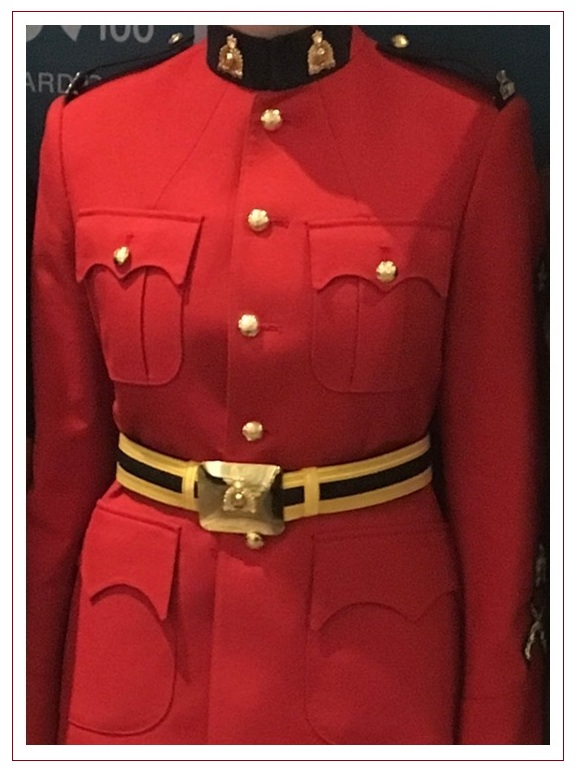
The research literature on trust in policing consistently identifies uniform recognition as one of the primary mechanisms through which public trust is established. When a citizen sees the Red Serge, they extend an immediate, automatic degree of deference and trust. That response is not learned consciously — it is conditioned over generations of cultural association. It is the very reason the Red Serge is Canada's most recognized symbol of lawful authority.
The Trust Displacement Effect describes what happens when that conditioned response is repeatedly triggered by people who do not hold the legitimate authority the RCMP uniform represents. The public extends trust that belongs to the institution of sworn policing — the RCMP — but that trust now lands on individuals who cannot legally exercise it, are not accountable for it, and cannot act on it if a member of the public genuinely needs help.
The displacement works in two directions.
Direction One: Trust Extended to Those Without Authority
In the short term, the civilian volunteer receives trust and recognition they have not earned through the oath, the training, or the legal accountability that sworn RCMP membership requires. The public has no reliable way to distinguish a civilian volunteer from a sworn RCMP member in the same uniform at a ceremonial event. That is not the volunteer's fault — it is a structural consequence of placing civilians in a uniform the public has been conditioned, over generations, to associate exclusively with sworn police authority. The institutional arrangement produces an outcome in which the public is not in a position to know the difference. This is precisely the mechanism that was exploited in Nova Scotia in 2020, where the public's conditioned trust in the RCMP uniform proved fatal.
Direction Two: Erosion of the Uniform's Reliability as a Signal
More corrosively, once it becomes publicly known — as it inevitably does — that the Red Serge is worn by civilians with no sworn police authority, the damage extends well beyond the pipe band program. It erodes the reliability of the uniform itself as a signal of lawful authority. If the Red Serge can be worn by anyone the RCMP invites to a ceremony, it ceases to function as a dependable indicator of who is and is not a sworn RCMP member. Every subsequent interaction a citizen has with a uniformed RCMP member carries a new and unnecessary uncertainty: is this person in Red Serge actually a police officer? That uncertainty, once introduced, cannot easily be recalled. This is not a theoretical concern — it is one the author encountered directly, having observed individuals in Red Serge at an official event and presumed them to be sworn RCMP members. They were not. They were civilian musician volunteers.
The Mass Casualty Commission
The Mass Casualty Commission documented the most extreme consequence of this mechanism. The Nova Scotia perpetrator exploited the public's conditioned trust in the RCMP uniform to approach and kill people who would otherwise have fled or sought help. The Commission's finding was unambiguous: the uniform's authority is only as reliable as the institution's control over who wears it. It is reasonable to ask whether, over the course of nearly three decades, adequate RCMP controls have been maintained over uniforms issued to civilian volunteers.
The pipes and drums program and the Nova Scotia tragedy are not equivalent — and nothing on this page suggests otherwise. What they share is the same underlying principle: when the public cannot rely on the RCMP uniform as a dependable signal of sworn authority, the consequences fall on ordinary citizens who have no way of knowing the difference.
Finding: The Trust Displacement Effect is not a criticism of individual volunteers. It is a structural observation about what happens when a symbol of institutional authority is extended beyond the boundaries of the institution it represents. The pipes and drums program represents a slow, institutionalized form of that displacement — not through malice, but through the quiet normalization of civilians in sworn uniform. The result is the same regardless of intent: the Red Serge becomes a less reliable signal of lawful authority, and the public trust it carries is gradually, invisibly diminished. That outcome serves no one — not the public, not the institution, and not the volunteers themselves.
Argument 3: Community Policing as a Tactical Argument — Not a Philosophy
Arguments 1 and 2 address what the community policing claim fails to deliver, and what it costs in public trust. Argument 3 addresses something more troubling: the documentary evidence that community policing was deployed not as a genuine rationale, but as a deliberate strategy to avoid scrutiny of the civilian uniform question altogether.
The email record does not merely reference community policing — it documents the deliberate use of community policing as a rhetorical shield. The internal record names it directly. Document #35, the Position Paper dated February 26, 1998, signed by a member in Ottawa, is the source document for what the analysis labels Tactic 4 — Frame Civilian Inclusion as Community Policing, Not as a Uniform Question. This was not a philosophy. It was a communications strategy designed to reframe a uniform and legal compliance issue as something warmer and more defensible.
The position paper presented to the CEDC and to the SEC argued that the initiative was about voluntarism, partnership, and bringing the Force closer to the communities it serves. What the presenters did not disclose — to the CEDC on February 25, 1998 (Email #34, CEDC Meeting Minutes), to the DSRRs, or to the SEC on April 15, 1998 — was that the practical consequence of approval would be civilians with no connection to the Force appearing in modified Red Serge at official RCMP events, presenting themselves in the eyes of the public as serving RCMP members. Email #26, dated February 10, 1998, shows the CEDC Folio had already formally defined the civilian dress question, and Email #29, dated February 13, 1998, confirms a very senior NCO at 'HQ' was aware civilians would already be present in the Nova Scotia Tattoo group without legal authorization. And because all band members were dressed alike — civilians and sworn RCMP members indistinguishable from one another — the arrangement was embedded in indistinguishability from the outset. No one in the public could tell the difference between one and the other.
A senior NCO in 'HQ' post-approval correspondence confirms the strategy held. Email #33, dated February 20, 1998, shows the member forwarding the position paper five days before the CEDC meeting. Following the SEC decision of April 15, 1998, the same member described it as a vindication of the committee's philosophical approach — the community policing and partnership argument that had underpinned the civilian inclusion case from the beginning. The governance documents that followed embedded this framing into the Band mandate, describing the role as ensuring band functions befitting the Force's community policing philosophy. Even the tartan licensing revenue was directed to the RCMP Foundation for community policing initiatives — completing the rebranding of a uniform question as a community benefit.
Finding: The pattern is consistent and it is deliberate. At every stage where the uniform question could have been addressed directly — with the Deputy Commissioner in Regina, with Regular Members who objected, at the CEDC on February 25, at the SEC on April 15, in the governance framework that followed — it was displaced by the community policing narrative. The legal exposure created by civilians wearing the most protected uniform in Canada was never examined. It was argued around. It was displaced. The record does not suggest an oversight. It documents a choice.
The civilian uniform question was also compartmentalized. ATIP documents indicate it was presented selectively to a small number of individuals within the discussion process, but was not fully disclosed to others — particularly within the senior command structure. Each body in the approval chain received a partial account. No single decision-maker appears to have been given the complete picture: that civilians would wear the most legally protected uniform in Canada, with no registry, no vetting, no audit trail, no Ministerial approval, and no mechanism by which the Commissioner could exercise legal authority over them. ATIP documents show the goal was accomplished regardless.
The Complete Picture
The documentary record, taken as a whole, tells a consistent story. Community policing was pushed to the front — not as a governing philosophy, but as a decoy. It displaced the uniform question at every stage where that question might otherwise have been answered directly. ATIP documents refer.
Objections to civilians being authorized to wear the RCMP uniform were raised thirteen times across the approval process. Not one of those objections received a direct answer. ATIP documents refer.
The discussion phase was rushed. The Royal Visit in Fredericton and the International Tattoo in Halifax created deadline pressure that compressed deliberation and foreclosed the kind of careful review the question required. Momentum substituted for process. ATIP documents refer.
No one in the senior RCMP command structure received the whole story. The Deputy Commissioner in Regina, the CEDC, the DSRRs, the SEC — each was given a partial account. The complete picture — civilians in the most legally protected uniform in Canada, ungoverned, unregistered, and beyond the Commissioner's legal authority — was never assembled in one place and put before a decision-maker who could have said no. ATIP documents refer.
And no one outside the Force was offered an opportunity to respond. Not the Minister, whose approval was required under the RCMP Regulations for modifications to the scarlet tunic. Not the Treasury Board, whose authorization governed the distribution of federal uniforms and kit. Not Parliament, whose oversight role exists precisely for decisions of this kind. Not the public, who for twenty-seven years have encountered civilians in the most recognizable symbol of Canadian law enforcement without knowing they were not looking at a sworn police officer. Not the communities the RCMP serves, whose trust in the uniform was being quietly extended to persons the institution could not identify, could not discipline, and had no legal authority over. ATIP documents refer.