Disclaimer: This page is written in an exploratory, academic tone. It does not allege wrongdoing or assign blame to any individual, group, or organization. It seeks only to examine what the documentary record does — and does not — reveal about the 1998 Senior Executive Committee decision and its relationship to the civilian use of the RCMP uniform in pipes and drums bands. All claims are based on ATIP documents and sources cited herein. Nothing on this page is intended to impute wrongdoing to any individual.
Conclusion
This research asks three straightforward questions:
First, when and under what authority did civilians come to wear the Royal Canadian Mounted Police Red Serge uniform?
The question is narrow. But it matters.
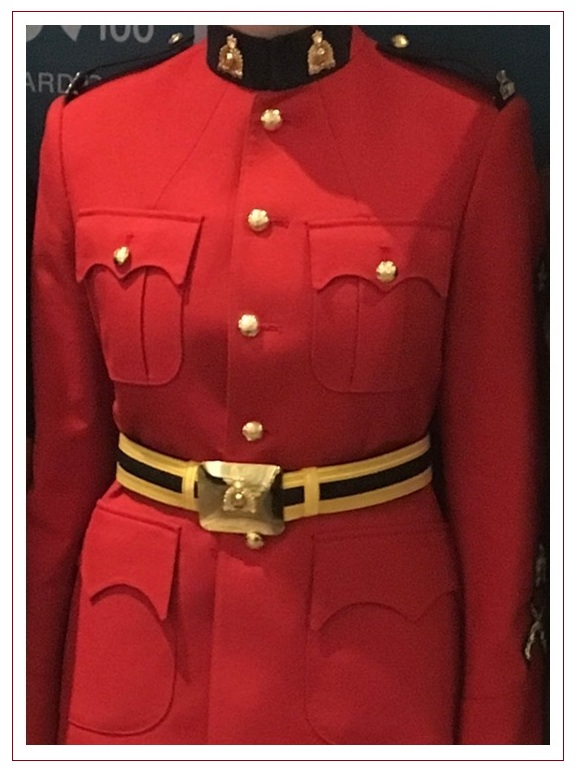
The Red Serge is not simply a ceremonial garment. Its design and use are governed by a formal legal framework — the Royal Canadian Mounted Police Act and the Royal Canadian Mounted Police Regulations, 2014 — instruments that vest authority over RCMP uniforms squarely within the responsibility of the federal government. That legal foundation means that any extension of the uniform's use to individuals outside the sworn membership of the Force is not a matter of custom alone. It is a matter of institutional and legal governance.
A further dimension of that governance bears direct emphasis. The Royal Canadian Mounted Police Act designates the Scarlet Tunic as a component of the "significant uniform" of the Force — a designation that carries specific legal consequences. Any modification to, or sanctioned departure from, the design of that uniform is not an administrative matter internal to the RCMP alone. It is one that engages the statutory authority of the Minister responsible for the Force. The publicly available record does not establish that this obligation was ever formally fulfilled. That gives rise to a second question, of equal weight to the first:
Second, was approval sought from the Minister — and if so, when — to modify and change the design of the Scarlet Tunic — a component of the "significant uniform" as defined under the RCMP Act — and why do documents bearing on that approval not appear in the records released under the Access to Information Act?
These two questions are related but distinct. The first asks about the origin and authority of distributing and dressing civilians in the RCMP uniform. The second asks whether the statutory obligation to engage Ministerial oversight was ever fulfilled — and if the relevant records exist, why they have not surfaced in response to formal Access to Information requests. A third question is of equal weight to the first two:
Third, the distribution of RCMP uniforms and kit to civilian volunteers is a matter requiring formal examination. The Red Serge and associated accoutrements are government property, procured at public expense and subject to Treasury Board materiel management policy. On what authority this property was issued to individuals outside the sworn police officer membership of the Force — and at what public cost — has not been addressed in the available record released under the Access to Information Act and warrants a formal accounting.
All three questions remain unanswered in the publicly available record.
The historical literature does not resolve any of these questions. Historians such as Pierre Berton and R. C. Macleod have written extensively about the symbolism of the Red Serge and its place in Canadian public life. Neither the historical accounts nor the broader documentary record identifies a long-standing tradition in which civilians routinely wore the uniform as part of RCMP ceremonial pipe bands. The available evidence suggests the practice emerged most likely around 1998 — as part of a 125th Anniversary initiative or programmatic development rather than as a continuation of earlier historical custom.
What the Documentary Record Shows
The findings below are drawn exclusively from internal RCMP correspondence from January to April 1998, released under the Access to Information Act, relating to the RCMP 125th Anniversary Tartan Initiative. Where the language of the documents is quoted, it is quoted exactly. No conclusion is drawn that the documents do not support.
I. The Practice Was New — Not Historical
The correspondence establishes that civilian participation in RCMP pipe bands wearing the Red Serge was not a continuation of any long-standing tradition. It was a new development, originating now in the context of the 125th Anniversary initiative.
The CEDC Folio — the formal presentation document prepared for the RCMP's senior executive in early 1998 — notes that it had been twenty-five years since the first proposal to adopt a tartan was put forward, describing approximately two hundred RCMP pipers and drummers then wearing the uniforms of other police bands as
"lost opportunities."
CEDC Folio, February 1998Internal correspondence confirms that the Force's first RCMP Community Band had been formed in Edmonton only in 1992. As of early 1998, the formal position paper circulated within the initiative presented civilian participation not as an established practice to be regularized, but as one of three alternatives requiring a decision — the others being discontinuation of community bands entirely, or restriction to Regular Members only. The practice did not have a settled prior foundation. The civilian strategy was now being created.
II. The Civilian Question Arose Early — and Was Immediately Compartmentalized
The question of civilians wearing the Red Serge arose at the very beginning of the correspondence released by the RCMP — in the first week of January 1998 — and from that point forward it was managed through a process of deliberate compartmentalization. Different Officers were given different information at different times. No single Officer outside the initiative's inner circle was ever given the complete picture before the key decisions were made.
The first mention appears in an informal exchange between RCMP Member 1 and RCMP Member 2 in early January 1998. RCMP Member 1 acknowledged "the K Div/civilian band question," expressing the view that "there should be enough room in the pool for most interested members." The exchange was entirely private between two members and not recorded in any official document given to others. Email #4
RCMP Member 2 raised a direct concern — that if civilians from one Division were given priority over regular members, "I foresee a problem developing." Email #5 In a subsequent message dated January 6, 1998, RCMP Member 2 made the strongest statement in the record:
"I have a major problem with civilians wearing any type of red serge uniform. I'm sure others in this Division would feel the same way."
RCMP Member 2 — Email #9, January 6, 1998He cited twenty-two years of service, membership on the tartan committee, hundreds of Force functions performed, and having previously been displaced by a civilian from another Division. These exchanges took place entirely outside the official record. They were not disclosed to the Clothing and Design Committee (CEDC) or the Senior Executive Committee (SEC) or to the Deputy Commissioner in central Canada who later raised formal concerns about the tartan initiative.
At the same time — unknown to RCMP Member 2 and to senior Officers outside the initiative's inner circle — one Division in western Canada had already taken unilateral action. As confirmed in correspondence dated February 12, 1998, that Division had
"carved blue lapels into the red serge for their civilians"
RCMP Member 1 — Email #27, February 12, 1998modifying the Significant Uniform of the Force without authorization, before any formal policy had been established and before the CEDC or the SEC had considered the question of dressing civilians in Red Serge.
III. The Sequencing Strategy Was Deliberately Designed
By February 1998, the members managing the initiative had developed an explicit written strategy for how the civilian question would be handled through the upcoming formal approval process.
RCMP Member 3, the senior member chairing the Tartan Subcommittee, set out the strategy in a message dated February 13, 1998. He explained that the CEDC presentation would cover only two formal items — 1) the tartan and 2) the Orders of Dress for Regular Members. The civilian question would be raised separately, as a discussion item placed deliberately outside the formal folio items. He stated explicitly: Email #29
"We are not changing the SUF nor did we ever intend to do so."
RCMP Member 3 — Email #29, February 13, 1998The senior member who names the specific regulation governing the Significant Uniform, and then constructs an internal argument to avoid engaging the statutory process that regulation implies, has made a documented choice not to engage Ministerial authority. RCMP Member 1 confirmed the strategy the same day: "noted and concur." Email #29
On April 9, 1998 — six days before the SEC meeting — RCMP Member 1 sent a strategy memorandum to the tartan subcommittee members describing a proposed "pilot project" for civilians wearing modified red serge. He asked recipients to consult their constituencies and reply directly. He then added: Email #53
"Please refrain from forwarding this email hither and yon."
RCMP Member 1 — Email #53, April 9, 1998The Senior Executive Committee (SEC) was not informed of this pre-meeting canvassing.
IV. The Information Given to the Deputy Commissioner Was Incomplete
On February 13, 1998 — the same day the sequencing strategy was confirmed in writing — a Deputy Commissioner from western Canada raised four formal objections to the initiative, stating it was the first time he had heard of the proposal and expressing concern about the objectivity of the committee behind it. Email #30
RCMP Member 1 prepared a formal two-page response presenting the initiative as well-supported, historically grounded, and progressing smoothly. Email #32 What the response did not disclose is equally significant — and is documented across the correspondence.
It did not disclose that civilians had already been confirmed as participants in the Nova Scotia Tattoo group — confirmed in RCMP Member 1's own words the previous day:
"There WILL be civilians in that group. The addition of Moncton players is a surprise and you can bet that most will be civilians."
RCMP Member 1 — Email #27, February 12, 1998It did not disclose that one Division had already modified the Red Serge for civilian band members without authorization. It did not disclose that RCMP Member 3 had that same morning explicitly invoked Regulation 64 and constructed a strategy to argue around it. It did not disclose the strong personal objections of a Regular Member directly involved in the tartan committee — objections never formally recorded in any official document. It did not disclose unresolved design questions, unsecured artist's rights, a competing design concern raised by an external international expert, or a production lead time privately described as "unanticipated."
The Deputy Commissioner was given a carefully constructed account of the initiative's legitimacy and progress. He was not given the information most directly relevant to the concerns he had raised.
V. The CEDC Was Given an Assurance That Was Incomplete
At the CEDC meeting on February 25, 1998, the presentation proceeded exactly as designed in the written strategy of February 13. The formal recommendation covered two items: 1) the tartan and 2) the Kilted Orders of Dress for Regular Members. Both received strong support. Then afterwards, the civilian question was then raised — after the formal vote — as a discussion item. Email #34
The Division Staff Relations Representatives (DSRRs) formally objected, stating that the membership would "not support civilian members, public servants, or civilians wearing the Scarlet Tunic." One representative compared the prospect to "the outcry over summer students wearing the Scarlet Tunic on Parliament Hill." In response, the presenters:
"assured those in attendance that the proposal was only seeking approval for Kilted Orders of Dress to be worn by Regular Members."
CEDC Minutes — February 25, 1998That assurance was accurate as a description of the formal recommendation on the table. It was materially incomplete as a description of what the two presenters knew at the moment they gave it. At that moment, they knew civilians had been confirmed for the Nova Scotia Tattoo group, that one Division was already dressing civilians in modified Red Serge, that a position paper on civilian inclusion had already been completed, and that the civilian question would go to the SEC within weeks. And most importantly, they knew precisely what they had chosen not to disclose to the Deputy Commissioner from western Canada earlier that same day — that the civilian question was not a future possibility to be considered, but a present reality already unfolding on the ground, in uniform, without authorization, and without the knowledge of the senior Officers whose responsibility it was to know.
In that respect, the decision to dress civilians in the Red Serge had, in practical terms, already been made. One Division had made it unilaterally. The Nova Scotia Tattoo commitment had confirmed it. The royal ceremony in Fredericton had locked it in place. By the time the CEDC met on February 25, 1998, and by the time the SEC met on April 15, 1998, the question before both bodies was not whether civilians would wear the Red Serge. It was whether the institution would find a way to approve what had already happened. The CEDC minutes record no consensus on the civilian question. The matter was formally deferred — and carried forward regardless.
VI. The SEC Decision Did Not Explicitly Approve Civilian Inclusion
On April 15, 1998, the Senior Executive Committee considered the CEDC recommendation. The formal decision, recorded in the Record of Decision signed by the Commissioner, approved the tartan and three Pipes and Drums uniforms — all described as approved for RCMP regular members. Email #58
Civilian inclusion does not appear as a voted proposition anywhere in that record. It appears only in the discussion section: there was "general consensus" that all band personnel should wear the same uniform and that "colour should be red." The Division Staff Relations Representatives' position — that they "will not support this initiative if it means wearing part of the significant uniform" — was recorded and then overcome by the finding that the Pipes and Drums Tunic "is not the significant uniform since modified."
No standalone vote on civilian inclusion was held. No explicit decision that civilians may wear the modified Red Serge appears in the Record of Decision. The outcome was embedded in discussion consensus framing and carried within a decision formally approving uniforms for regular members.
The Minister does not appear in the Record of Decision. The Minister does not appear anywhere in the correspondence released under the Access to Information Act.
VII. The Unauthorized Modification Was Never Stopped
Throughout the correspondence, from February through April 1998, the unauthorized modification of the Red Serge by one Division is described, acknowledged at the highest institutional levels, and never corrected.
In February, the modification was described privately as "the quaint blue lapels that K Div have carved into the red serge for their civilians." Email #27 At the CEDC meeting in February, it was formally acknowledged in the official minutes — the presenters stated that this modification was:
"unacceptable and does not look proper."
CEDC Minutes — February 25, 1998No directive was issued. The modification was acknowledged again in the formal SEC submission in April. Email #57 The SEC Record of Decision of April 15, 1998 is silent on the unauthorized modification entirely. It approved the tartan and the Pipes and Drums uniforms. It did not address, censure, or direct the correction of the modification that had already been described as unacceptable at CEDC. The Division that had carved blue lapels into the Significant Uniform of the Force without authorization received no directive to stop, no reprimand, and no instruction to restore the uniform to its authorized design. The Significant Uniform of the Force was modified without authorization, described as unacceptable at CEDC, acknowledged again in the SEC submission, and never stopped. No corrective directive was issued at any point in the record.
The Minister Was Never Consulted
But what was said at the SEC — or left unsaid — does not change the law. The Royal Canadian Mounted Police Act designates the Scarlet Tunic as a component of the significant uniform of the Force, the design of which is subject to the approval of the Minister. Any modification to that design — whether made informally in Alberta, ratified by silence at CEDC, or absorbed into a broader approval at SEC — required Ministerial authorization. No document has been located in the records released to date under the Access to Information Act establishing that the Minister was ever consulted. That is the central and unresolved question that no internal decision — however senior the body that made it — has the authority to answer.
For any institution, that gap in the record would be a serious matter. For the Royal Canadian Mounted Police — an organization whose entire founding purpose is the enforcement of the law, and whose authority to act derives from that law — the absence of Ministerial consultation on a modification to its most legally protected symbol is not a procedural oversight. It is a failure to meet the very standard the Force exists to uphold.
VIII. The Compartmentalization — A Summary
The correspondence released by the RCMP documents a layered structure in which knowledge of the civilian question was distributed unevenly and deliberately across participants throughout the process.
| Participant | What They Were Told | What They Were Not Told | Key Emails |
|---|---|---|---|
| RCMP Members 1 & 3 (Inner Circle) |
The complete picture — held jointly throughout. They designed the strategy together. | Nothing. They were the architects of the sequencing strategy. | Email #27 Email #29 Email #53 |
| RCMP Member 2 | Moderate reassurance. "Enough room in the pool." | Civilians confirmed in Halifax Tattoo. One Division already modifying the uniform. Position paper advocating civilian inclusion already distributed and complete. | Email #4 Email #9 Email #27 |
| Division with unauthorized modifications | Their modification was described as unacceptable. | No directive to stop was ever issued. Minister apparently not consulted. The SEC decision overlooked their practice. | Email #27 Email #34 Email #57 Email #58 |
| Deputy Commissioner | Told of history of pipes, broad consultation, historical legitimacy, smooth progress. | Not told civilians confirmed in Halifax Tattoo. Unauthorized modifications ongoing. Regulation 64 invoked and argued around that same morning. Strong membership objections (DSRRs) never formally disclosed. Lead time crisis. Unresolved artist rights. | Email #30 Email #32 Email #27 Email #29 Email #4 Email #5 Email #9 |
| CEDC | Proposal seeks approval for Regular Members only. Strong support. Community policing rationale raised. | Civilians already in Halifax Tattoo. One Division already modifying Red Serge. Position paper on civilian inclusion completed. Civilian question to be brought to SEC regardless of CEDC outcome. | Email #29 Email #34 Email #27 Email #35 |
| SEC | CEDC recommendation. Community policing framing. Cost neutral. Broad support. | Confidential pre-meeting canvassing of subcommittee members not disclosed. The pilot project proposal not disclosed. Full history of objections across informal, official, DSRRS, and senior Officer channels not disclosed. | Email #53 Email #57 Email #58 Email #4 Email #5 Email #9 Email #30 |
| The Minister | Does not appear in the record at all —
absent from every document in the correspondence released
under the Access to Information Act.
Emails #1 – #58 |
||
IX. The Ministerial Authorization Question
The RCMP Act designates the Scarlet Tunic as a component of the significant uniform of the Force. The authority over that uniform, and any modification to its design, engages the statutory responsibility of the Minister.
The correspondence released under the Access to Information Act contains no reference to Ministerial notification, consultation, or approval at any point in this process. The approval chain runs from the Tartan Subcommittee through CEDC to the Senior Executive Committee. It is entirely internal.
The strategy explicitly adopted — confirmed in writing on February 13, 1998 — was to argue that the modified Pipes and Drums Tunic was not the significant uniform, thereby avoiding the need to engage the Ministerial authority that designation implies. That argument was advanced internally, accepted internally, and embedded in the SEC Record of Decision. Whether it was ever submitted to the Minister does not appear in the released record.
The absence of any Ministerial record in the documents released to date does not establish that no such record exists. It establishes that if such a record exists, it has not been produced in response to formal requests under the Access to Information Act. That is a matter requiring a direct institutional answer.
X. What the Record Supports
The practice of civilians wearing the RCMP Red Serge in pipe bands originated in or around 1998 and was not a continuation of prior historical custom.
The question of civilian participation was identified within the initiative from its earliest stages — January 1998 — and was managed through deliberate compartmentalization rather than open institutional deliberation. The written strategy of February 13, 1998 to the Deputy Commissioner in the mid west makes that compartmentalization explicit.
An unauthorized modification of the Significant Uniform was known to the initiative's planners, acknowledged at CEDC as unacceptable, acknowledged again in the formal SEC submission, and never stopped. The SEC decision overlooked the underlying practice without addressing the unauthorized modification.
The formal SEC decision of April 15, 1998 did not contain an approval of civilian participation in the Red Serge. No standalone civilian inclusion vote was held. That interpretation is confirmed by what followed immediately after the meeting. On the evening of April 16, 1998 — one day after the SEC decision — the Director of Corporate Management wrote directly to the tartan planners making clear that the SEC decision applied to Regular Members only. That communication, coming from the Director of the body that had just chaired the SEC presentation, is the strongest possible confirmation that civilian inclusion was not what the SEC had decided — and that those closest to the decision understood it in precisely those terms.
The statutory framework governing the significant uniform — including the potential engagement of Ministerial authority — was known to the initiative's planners, invoked by name in internal correspondence, and deliberately argued around through internal reframing rather than through the statutory process that framework requires.
No record of Ministerial notification, consultation, or approval appears in the documents released under the Access to Information Act. If such a record exists, it has not been produced. That question requires a direct institutional answer.
No record has been located establishing the authority under which RCMP uniforms and kit — government property procured at public expense — were issued to civilian volunteers. The circumstances of that distribution, the authority on which it rested, and the public cost at which it occurred have not been addressed in the available record and warrant a formal accounting.
The precise administrative or legal authority under which that development was sanctioned has not been identified in the publicly available record.
It is important to state that plainly, and equally important not to overstate it. The absence of publicly documented authority does not mean that no authority exists. In large public institutions, approvals and policy decisions are frequently recorded in internal directives, ministerial correspondence, or administrative memoranda that do not enter the open public record. This research does not assert that the practice is unauthorized. It observes that the authorization — if it exists — has not yet been clearly documented or identified. It equally observes that no evidence of Ministerial notification or approval has been located in the records released to date under the Access to Information Act.
That distinction matters, because the available evidence is consistent with a specific interpretation: that this practice emerged informally, without formal legislative or ministerial authorization, and later became institutionalized through administrative custom. That interpretation may be wrong. But it is what the publicly available record currently supports, and it is the reason all three questions deserve a direct answer from those with access to the full institutional record.
The broader significance of those answers should not be underestimated. Recent public discussions about police uniforms — including the findings of the 2020 Nova Scotia Mass Casualty Commission — have reinforced how directly the appearance of a police uniform is connected to public trust, institutional legitimacy, and the clarity of authority. The issues examined in that inquiry are distinct from the historical questions explored here. But they underscore a shared principle: that the governance of police symbols is not a trivial matter, and that clarity in how those symbols are controlled serves the public interest.
In institutions with long histories, traditions sometimes emerge gradually and become widely accepted before their formal origins are fully recorded. When historians encounter such moments, their task is not to criticize the institution but to clarify the record.
That is the purpose of this research.
The Red Serge uniform carries more than a century of institutional meaning. It is one of the most recognizable symbols in Canadian public life — not only of the Royal Canadian Mounted Police, but of Canada itself. Ensuring that the authority governing its use is clearly understood is therefore not merely a technical question of regulation. It is an effort to preserve the integrity of the history and traditions the uniform represents.
All three questions raised here are simple ones. When and under what authority did this practice begin? Was Ministerial approval ever sought for a modification to the design of the Scarlet Tunic — and if so, where is the record? And on what authority were RCMP uniforms and kit issued to civilians — and at what public cost? Answering them would complete the historical record.
-
A new uniform must be designed for civilian musicians — one that bears no RCMP insignia, identification, or resemblance to the Red Serge or any other element of the "significant uniform." The current practice of dressing civilians in a modified version of the RCMP Scarlet Tunic creates an ambiguity that a genuinely distinct uniform would eliminate entirely. RCMP musicians could still wear the uniform in local community bands, as recommended by the Commissioner and the Senior Executive Committee in 1998.
In addition, the use of a banner or other visible identifier clearly marking participants as RCMP volunteers or civilian musicians would be far more appropriate than any adaptation of a legally protected police uniform — and would better reflect the actual status of those wearing it. It would diminish liability for both the musician and the RCMP. It would also be more consistent with the recommendations of the Mass Casualty Commission regarding the public display and use of police uniforms. Such a policy would also resolve the problem of indistinguishability — the difficulty, for spectators and the public, of telling apart a sworn RCMP member from a civilian musician wearing an identical or near-identical uniform.
It bears noting that the CEDC itself heard exactly this proposal in February 1998. The Division Staff Relations Representatives proposed that civilians be provided with a blue jacket rather than the modified Scarlet Tunic. That proposal was overridden. It was the right proposal then. It remains the right proposal now.
-
The second question calls for a broader institutional response. The RCMP should undertake a formal review — engaging the Minister responsible for the Force and relevant federal departments — to determine whether pipes and drums bands have an appropriate and legitimate place within an organization whose founding mandate was, first and foremost, the peaceful resolution of conflict. That foundational principle is not merely historical. It deserves to inform how the Force presents itself in ceremony as much as it does in operations. A formal review would bring transparency to a practice that has, to date, developed without a clearly documented institutional or legal foundation.
-
A third matter deserving formal examination is the distribution of RCMP uniforms and kit to civilians. The Red Serge and associated accoutrements are government property, procured at public expense and governed by Treasury Board policies on the management and disposal of public assets. The circumstances under which such property came to be issued to individuals outside the sworn membership of the Force — and whether that distribution was authorized under the applicable financial and materiel management frameworks — has not been addressed in the publicly available record. A formal accounting of how this distribution occurred, under whose authority, and at what cost to the public, would be a reasonable and necessary complement to the broader review recommended above.