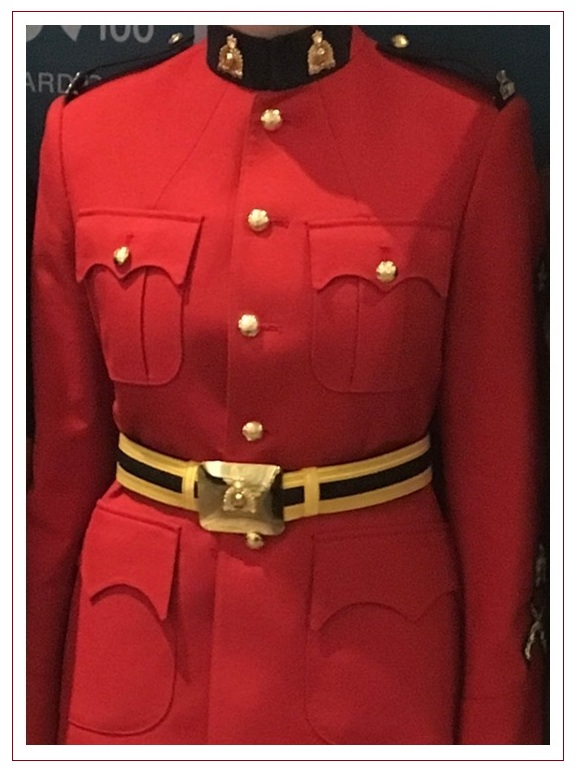
The RCMP Red Serge and Civilian Pipe Band Musicians:
A Question of Legal Authority
Since approximately 1998, civilian volunteers in pipes and drums bands affiliated with the RCMP have performed publicly while wearing the Red Serge — Canada's most legally and symbolically significant RCMP uniform. Independent research, supported by documents obtained through the Access to Information and Privacy Act, has not located any record confirming that this practice was authorized by the Minister of Public Safety, as required under the Royal Canadian Mounted Police Regulations, 2014 (SOR/2014-281), s. 27(1). The legal authority on which this practice rests has not been documented.
The emails released by the RCMP are surprising and disappointing in their content, and manipulative in their style — appearing to minimize well-documented internal opposition to citizen musicians wearing the Red Serge rather than engage with the issue directly. The records show the RCMP does not maintain a list of who these citizens wearing the Red Serge are.
The Red Serge is not merely ceremonial dress. Under s. 27(1) of the Royal Canadian Mounted Police Regulations, 2014, the significant uniform of the Force — including the scarlet tunic — requires Ministerial approval for any modification to its design. This is a higher standard than applies to any other RCMP uniform. When women were first admitted as Regular Members in 1974, modification of the significant uniform was formalized through Order in Council P.C. 1975-354. No equivalent process has been located in connection with the 1998 pipes-and-drums decision.
- No Ministerial approval located. ATIP documents confirm the Red Serge was modified in 1998 to accommodate civilian musicians. No record of Ministerial consultation or approval has been found.
- The Commissioner and the Senior Executive Committee (SEC) clearly did not approve civilians to wear the RCMP uniform. Documents show RCMP members in the field opposed the distribution of RCMP uniforms to civilians especially the Red Serge. The Clothing and Equipment Design Committee (CEDC) opposed the idea. The full complement of elected Divisional Staff Relations Representatives (DSRRs) Canada-wide opposed the practice on several occasions. A Deputy Commissioner in Regina opposed civilian use of the Red Serge, as did the Director of Corporate Management. Historical documents from 1998 released by the RCMP clearly explain how strenuous opposition by the entire RCMP membership including senior Officers to citizens wearing the Red Serge was overridden.
- No legal opinion is found on the record. The documentary record does not reveal whether RCMP Legal Services provided a formal opinion on whether the Commissioner had authority to approve this modification without Ministerial involvement.
- Mass Casualty Commission relevance. The Commission's 2023 report made explicit recommendations on RCMP uniform control following the Nova Scotia tragedy, in which a perpetrator wore an RCMP uniform. Whether those findings have been applied to civilians wearing the RCMP uniform has not been addressed.
- Crown property accountability. RCMP uniforms are government property subject to the Financial Administration Act and Treasury Board policy. No documentation has been located authorizing their issuance to citizen musicians outside the sworn membership of the RCMP.
Civilian musicians in Red Serge are visually indistinguishable from sworn RCMP members wearing the same uniform at public ceremonies, parades, and high-security events. Members of the public in distress may seek assistance from a civilian volunteer who holds no police authority, bears no oath of service, and has received no training at 'Depot' Division. This ambiguity creates foreseeable liability exposure for volunteers, for the public, and for the RCMP itself.
-
1The Minister of Public Safety be formally briefed on the absence of documented Ministerial approval for the 1998 pipes-and-drums decision.
-
2The RCMP Commissioner be asked to conduct an internal investigation to determine: 1) the circumstances and legal authority under which civilians came to wear the Royal Canadian Mounted Police Red Serge uniform, 2) whether approval from the Minister was ever sought in 1998 to modify the Scarlet Tunic—a "significant uniform" under the RCMP Act—and why any documents reflecting such approval are absent from records released under the Access to Information Act; additionally, 3) the issuance of Red Serge and related government-issued equipment to civilian volunteers, procured at public expense and governed by Treasury Board materiel management policy, remains unexplained in the available records and warrants formal review.
-
3RCMP Legal Services produce a formal written policy on civilian use of the significant uniform.
-
4A federal expenditure review examine the issuance of Crown-owned uniforms and resources to civilian volunteers.
-
5If a pipes-and-drums tradition is to continue, it be placed on a properly authorized, documented foundation — with a distinct uniform for civilian musicians that does not replicate the Red Serge or parts of the RCMP uniform.
Nothing on this page constitutes legal advice. The author is not a lawyer. All statutory provisions are quoted from publicly available official sources. All interpretations and conclusions are the author's own.