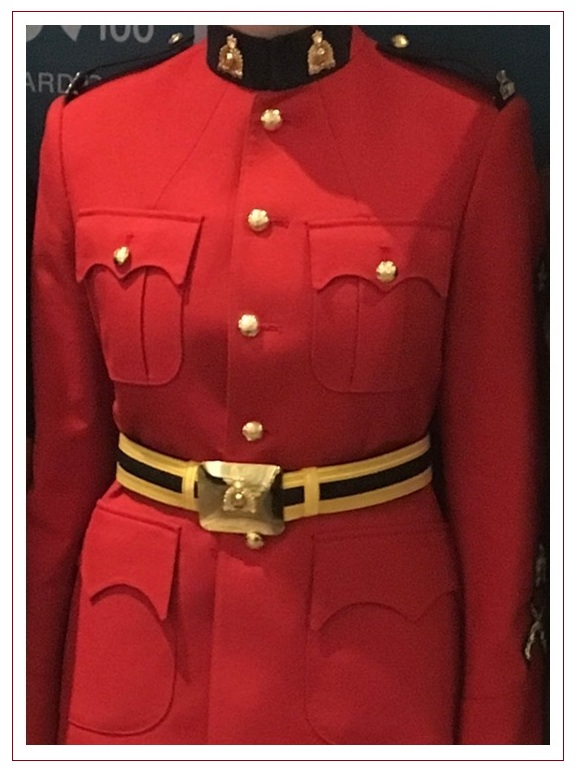
An Essay: A Colony of Unknowns
What the Access to Information Act Revealed
File No. A-2025-01989 · Filed May 20, 2025 · Response September 4, 2025
The Access to Information Act exists so that Canadians can know what their government knows. It rests on a simple premise: that institutions which make decisions about public matters should be able to account for those decisions in documentary form. A request produces records. Records reveal policy. Policy can be examined, challenged, and improved.
What happens when a request produces nothing?
In May 2025, a formal Access to Information request was filed with the Royal Canadian Mounted Police. The question was straightforward: how many civilians, how many retired members, and how many active serving members are currently in each of the eight RCMP Pipes and Drums bands across Canada?
It is the most basic factual question one could ask about the bands — who is in them.
The RCMP's response arrived on September 4, 2025. It contained one substantive sentence.
Bands included in the request:
National Division (Ottawa) · "C" Division (Quebec/Montreal) · "E" Division (BC/Vancouver) · "F" Division (Saskatchewan/Regina) · "D" Division (Manitoba/Winnipeg) · "K" Division (Alberta/Edmonton) · "J" Division (New Brunswick/Moncton) · "H" Division (Nova Scotia/Halifax)
What This Response Means
The RCMP's response does not mean the information does not exist somewhere. Internal correspondence from 2020 confirms that a senior member of 'HQ' was able to verbally describe pipes and drums band composition in some detail when asked informally. It was not confirmed if individual Commanding Officers know who is in the band in their division? Pipe Majors know. The bands themselves know.
What the response means is that no centrally maintained record exists. The institution that approved, in April 1998, the wearing of its most legally protected uniform by civilian volunteers has kept no central accounting of who those civilians are, how many there are, or how the composition of the bands has changed over twenty-seven years?
This is not a filing error. It is a structural absence — the institutional expression of a decision-making process that prioritised momentum over accountability from the beginning.
The 1998 Decision and What It Did Not Require
In early January 1998, internal RCMP correspondence first raised an objection about whether civilians should be permitted to wear the Red Serge in RCMP-affiliated Pipes and Drums bands. The question was debated in emails over six months across multiple channels — formally between Regular Members & senior RCMP Officers, formally at the Clothing Equipment Design Committee (CEDC), and ultimately at the Senior Executive Committee (SEC) on April 15th, 1998.
The SEC's formal Record of Decision was solely for Regular Members. Civilians were excluded. The civilian question was noted, debated, and deferred for further consultation. Nevertheless, civilians were soon incorporated into the bands — beginning with the Royal Visit in Fredericton, NB and then the Nova Scotia Tattoo in July 1998 — on the basis of momentum, prior commitments, and an interpretation of the SEC discussion that was never formally ratified.
Noteable finding. What is quite remarkable about this situation is that the 1998 process did not require any mechanism to track who the civilians were. No registry of civilians in RCMP uniform. No security vetting. No central list. No annual reporting requirement. No audit trail. No Treasury Board exemption to distribute and wear the RCMP uniform and kit. The governance documents produced after the SEC decision established band management structures, uniform standards, and badge specifications. They did not establish any requirement to count, record, or report on civilian participation. According to ATIP, the RCMP has no records identifying who these civilians are, yet they dress in the RCMP uniform — a uniform that did not receive Ministerial approval.
This striking observation reveals a structural blind spot: a program was authorized to distribute official RCMP uniforms and kit to civilians, yet no corresponding infrastructure was created to track who received them.
The missing elements catalogued above — no registry, no vetting, no central list, no audit trail, no reporting requirements — are not just bureaucratic oversights. They represent a failure to answer the most basic administrative question: who has access to this controlled item?
The Ministerial approval issue compounds this. Under the RCMP Regulations, modifications to the scarlet tunic require approval from the Minister. If the documents establishing uniform standards and badge specifications for this program do not reference that approval, it raises questions about whether the regulatory pathway was followed — or whether anyone thought to check.
What makes this particularly difficult to unravel now is that the absence of records is not just an inconvenience for researchers. It means the RCMP itself cannot account for how many civilians are wearing its uniform, where they are, or under what ongoing authority. The program created a category of uniformed participants that exists outside the institution's normal accountability structures. This is compounded by a fundamental legal reality: the Commissioner of the RCMP holds statutory authority over Regular Members under the RCMP Act, but that authority does not extend to civilian volunteers. The civilians wearing the scarlet tunic are not subject to the Commissioner's discipline, direction, or recall. There is no mechanism — legal or administrative — by which the RCMP can compel a civilian band member to return a uniform, cease wearing it, or account for their conduct while wearing it. The Force authorized the distribution of its most protected uniform to a category of persons over whom it has no legal control.
The situation moves in a single, damning arc: the RCMP cannot account for these civilians — and even if it could find them, it has no legal authority over them.
The fact that ATIP produced no records identifying these individuals suggests either that such records were never created, or that they were not retained — neither of which is reassuring for a program involving distribution of a protected uniform.
The Informal Answer That Exists
In April 2020, the same question was put to the RCMP informally. A senior member of the RCMP responded directly, confirming that RCMP Pipes and Drums bands are composed of all categories — Regular Members, Civilian Members, Retired Members, Public Service employees, and civilian musician volunteers. When asked whether there was anything wrong ethically or legally with civilian musician volunteers wearing RCMP garb and representing themselves in the eyes of the public as RCMP police officers, the response was unequivocal: "...not at all — one hundred percent in favour." But that response did not reveal the objections raised in 1998 by serving members in the field, the entire RCMP membership represented by the DSRRs, and objections raised by the CEDC, SEC, and the Director of Corporate Management.
The informal answer exists. The formal record does not.
This is the colony of unknowns: a body of information that is held informally, scattered across eight divisions, known to band civilians but never assembled into a document that can be produced in response to a formal ATIP request. The Access to Information Act was designed precisely for this situation — to surface what institutions know but have not formally recorded. In this case, it confirmed that the recording was never done.
What the Silence Connects To
The 'no records exist' response from the RCMP does not stand alone. It connects directly to three other developments that together describe the arc of accountability failure surrounding this issue.
First, in September 2025, the RCMP responded to a separate request about the legal status of civilian band members by confirming that the band uniforms had been formally assessed for compliance with section 130 of the Criminal Code — the provision on impersonating a peace officer. That assessment was apparently conducted only after the question was raised. It was not part of the 1998 approval process. The legal foundation for a twenty-seven-year practice was examined, formally, for the first time, in response to external pressure.
Second, in April 2025, the Corps Sergeant Major's office directed RCMP Pipes and Drums bands to remove shoulder flash panels bearing the word "POLICE" from the grey shirt order of dress. This direction was issued because band members were being mistaken for serving police officers. The concern that justified this direction in 2025 is identical to the concern raised by the Divisional Staff Relations Representatives (DSRRs) at the CEDC meeting in February 1998. It took twenty-seven years to implement one part of what the membership's representatives asked for on the day of approval -- that civilians not be authorized to wear the RCNP uniform.
Third, the Mass Casualty Commission — convened following the April 2020 Nova Scotia tragedy — issued recommendations C.28 and C.29 on the management and disposal of police uniforms and the regulation of police paraphernalia. Those recommendations were prompted in part by the ease with which RCMP uniform items could be obtained by persons with no connection to the Force. The question of who holds RCMP uniforms, and on what authority, is now a matter of public safety — not merely institutional policy.
The 'no records exist' response sits at the centre of all three of these developments. The RCMP does not know how many civilians are wearing its uniform. It has not known since 1998. The requests that follow this page are designed to find out what else it does not know.
A Note on the Title
A colony of unknowns is what remains when decisions are made without the infrastructure to account for them. The civilians in the RCMP Pipes and Drums bands are not unknown to the people around them. They are unknown to the RCMP — uncounted, unregistered, and unrecorded in any document the Access to Information Act can reach. They wear the most legally protected uniform in Canada. Presently, nobody knows how many of them there are.
All responses to Access to Information requests — including records produced, redactions made, and 'no records exist' responses — will be published in full at redserge.ca as they are received.