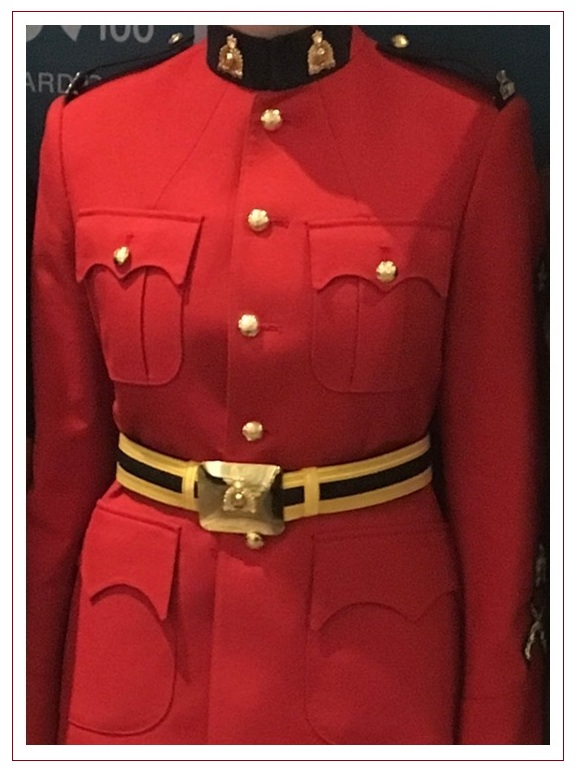
The series of essays which follow centres on three important questions relating to civilian volunteer musicians in the pipes and drums bands wearing the RCMP uniform.
First, when and under what authority did civilians come to wear the Royal Canadian Mounted Police Red Serge uniform?
Second, was approval sought from the Minister — and if so, when — to modify and change the design of the Scarlet Tunic — a component of the "significant uniform" as defined under the RCMP Act — and why do documents bearing on that approval not appear in the records released under the Access to Information Act?
Third, the distribution of RCMP uniforms and kit to civilian volunteers is a matter requiring formal examination. The Red Serge and associated accoutrements are government property, procured at public expense and subject to Treasury Board materiel management policy. On what authority this property was issued to individuals outside the sworn police officer membership of the Force — and at what public cost — has not been addressed in the available record released under the Access to Information Act and warrants a formal accounting.
Introduction
The scarlet tunic of the Royal Canadian Mounted Police — known as the Red Serge — is among the most recognized symbols in Canadian public life. To spectators, it identifies a police officer. For more than 150 years, it has represented the presence of law, order, and Canadian sovereignty from coast to coast to coast. It is not merely a uniform. It is a garment earned through sworn service, Basic Recruit Training at 'Depot' Division, and an unwavering commitment to the values the RCMP was founded to uphold: honesty, professionalism, compassion, respect, and accountability.
This website examines the legal and historical framework governing the RCMP uniform and asks a single, specific question: on what authority do civilian volunteers in pipes and drums bands affiliated with the RCMP wear the Red Serge? That question is not rhetorical. The answer, if one exists, should be documented — and the pages of this website examine whether it is.
The scarlet tunic is not a garment that may be worn by discretion, custom, or institutional habit. It is a component of the "significant uniform" of the Force, and Canadian law is explicit about what that means: its design is subject to the approval of the Minister. That is not administrative language. It is a legal requirement. And it gives rise to a question that this website places at the centre of everything that follows.
The scarlet tunic is a regulated component of the significant uniform of the
Royal Canadian Mounted Police. Its design — including any extension of that
design to a new class of wearer — is subject to the written approval of the
Minister. Civilians have been wearing that uniform in RCMP-affiliated pipes
and drums bands since at least 1998. The question is therefore not open,
speculative, or rhetorical:
Where is the Minister's written approval authorizing civilians to wear the
Red Serge — and if that approval does not exist, on what legal authority
has this practice been permitted to continue for more than 28 years?
If the authorization exists, it must be producible. If it is not producible, the practice has no legal foundation. There is no third option. The pages of this website establish why that conclusion is unavoidable — and why it demands a formal institutional response.
I served with the Force for 36 years. As a Veteran of the Royal Canadian Mounted Police, I write from direct experience with what the Red Serge demands — and what it represents to those who have earned the right to wear it. It is in that context that I examine a practice which has, over the past 28 years or so, become normalized within civilian volunteer pipes and drums bands affiliated with the Force. It is my contention that this practice, however well-intentioned, appears to constitute an unauthorized extension of a symbol whose meaning derives entirely from the law and sworn police service — and that it raises serious questions about the integrity of the RCMP uniform, the institution it represents, and the members who have earned it.
Furthermore, civilian volunteers have access to a wide range of alternative dress options that can convey professionalism, community identity, and organizational pride — options that do not engage the legal and regulatory framework that governs the RCMP uniform as Crown property tied to sworn police service.
RCMP uniforms are the property of the Crown, governed by policy and regulation, and their wearing by civilians — regardless of the ceremonial context — raises questions about whether it falls within the boundaries of that framework. This research argues that the practice warrants serious institutional scrutiny and, ultimately, reform.
The concerns this practice raises are not merely symbolic. They are specific, foreseeable, and institutional in character:
- Mistaken Identity. When a civilian dons the Red Serge, the public cannot reasonably be expected to distinguish that volunteer from a sworn RCMP member wearing the same uniform. A member of the public in distress may approach a civilian band musician seeking assistance that volunteer is neither trained nor authorized to provide.
- No Training. Unlike sworn RCMP members, civilian volunteer musicians have undergone no police training. They are not equipped — legally or practically — to respond to the situations a uniformed presence may invite.
- No Oath. Civilian band volunteers have taken no oath of office binding them to the values and legal obligations of the Force. They are, in the eyes of the law, private citizens — yet, in the RCMP uniform, they present themselves in a manner indistinguishable from those who bear the full weight of Crown authority.
- Liability Exposure. This ambiguity creates a significant liability exposure, both for the volunteers involved and for the RCMP itself, should an incident arise in which a civilian in RCMP uniform is perceived to have acted — or failed to act — in the capacity of a police officer.
- Uniform Control. The Mass Casualty Commission — convened following the Nova Scotia tragedy of April 2020, in which a perpetrator wore an RCMP uniform to deceive the public — made explicit recommendations regarding the control of RCMP uniforms and the dangers of their unauthorized use. The RCMP's continued authorization of the Red Serge for civilian band volunteers, in the years since that report was published, raises the question of whether those recommendations have been applied in this context — a question that deserves a clear institutional answer, given the human cost at which those findings were obtained.
- No Ministerial Authority. Documents released by the RCMP under the Access to Information and Privacy Act confirm that the Red Serge was modified in 1998 to accommodate civilian musicians in pipes and drums bands. This is precisely the kind of modification that s. 27(1) of the RCMP Regulations, 2014 requires the Minister to approve in writing. No such record has been located. That is not a procedural gap or a filing deficiency. It means either that the legally required approval was never sought — or that it was sought and granted, and the record has not been produced. Either possibility demands an answer. This finding is examined in full in the relevant section of this website.
- Public Emergency and Duty to Act. Public performances — parades, civic ceremonies, community events — are precisely the settings in which emergencies arise without warning. A vehicle collision, a medical crisis, a robbery, a car theft, a brawl, a child in distress: in any such situation, the sworn RCMP members present bear an immediate professional and legal obligation to respond. The civilian band volunteers standing beside them in identical uniforms bear no such obligation — yet the public cannot know the difference. A bystander seeking help will approach the nearest figure in Red Serge. If that figure is a civilian volunteer, the consequences of that confusion could be severe. The uniform, in that moment, is not a symbol. It is a representation of authority and capability that the wearer does not possess — and that the person in need has every reason to assume they do.
These are not hypothetical concerns. They are foreseeable consequences of a practice that has never been subjected to the rigorous policy examination it warrants.
Documents released by the RCMP under the Access to Information and Privacy Act reveal that the entire complement of Divisional Staff Relations Representatives (DSRRs) — the elected representatives of RCMP members across Canada — opposed the wearing of the Red Serge by civilians. Despite that opposition being on the record more than once, no document has been located that explains how or why the decision to proceed was made, by whom it was authorized, or on what legal basis it rested. The documentary record does not identify the legal authority on which the decision rested, or by whom it was formally made.
This website presents independent historical and legal research into a single, specific question: on what authority do civilian volunteers of pipes and drums bands affiliated with the RCMP wear the Red Serge?
That question is not rhetorical. It is a genuine research question — one that emerged from a careful review of Canadian law, RCMP regulations, historical records, consultations with lawyers, RCMP veterans, and serving members, and documents obtained through the Access to Information and Privacy Act. The research presented here does not allege wrongdoing or assign blame to any individual or group — that is the role of investigators — nor does it seek to diminish the contributions of the many dedicated people — civilian and sworn — who have served the RCMP with distinction.
What it does is examine a gap: between the legal framework that governs the Red Serge as Canada's most symbolically significant police uniform, and a practice that appears to have developed since April 15, 1998, whose regulatory authority and Ministerial approval have not, to date, been documented. The law is not ambiguous on this point. The scarlet tunic is part of the significant uniform. The significant uniform requires Ministerial approval for any change to its design. Extending the right to wear that tunic to persons outside the sworn membership of the Force is a change to who the design serves — and no less a modification for being framed as custom rather than alteration. The authorization, if it exists, must be on the record. It is not.
What This Website Examines
The pages of this website address the following interconnected questions:
- What does Canadian law say about who may wear the Red Serge, and under whose authority its design may be modified or extended?
- Does the historical record support the existence of a pipe band tradition within the RCMP prior to 1992, when the first RCMP-affiliated pipe band was founded in Edmonton — a full six years before the Commissioner formally approved a kilted uniform and RCMP tartan on April 15, 1998?
- What does the Crown property framework — the Financial Administration Act, the RCMP Act, and Treasury Board policy — say about the issuance of RCMP uniforms to civilians?
- What did the Mass Casualty Commission find about RCMP uniform control, and what are the implications for this practice?
- What have Access to Information requests revealed — and not revealed — about the authorization of RCMP uniforms to civilian volunteers in pipes and drums bands?
A Note on Tone and Purpose
This research is presented in a scholarly and exploratory spirit. The questions raised here are institutional and legal in character. They concern the integrity of a national symbol, the authority of Canadian law, and the accountability of a public institution. They deserve to be examined carefully, openly, and without prejudice.
The central question is not whether civilian band members are honourable people, or whether their contributions to community events have value. They may well be, and those contributions may well have merit. The question is strictly legal: is it lawful for civilian volunteers to wear the RCMP uniform, and where does the written authorization required by law actually rest? Good intentions do not satisfy a statutory requirement. Custom does not substitute for Ministerial approval. And 25 years of unremarked practice does not, in Canadian administrative law, constitute a legal foundation for conduct that the applicable regulation requires to be formally authorized.
"The significant uniform of the Force, the design of which is subject to approval by the Minister, consists of a felt hat, scarlet tunic, blue breeches with a yellow cavalry stripe on each side, brown Strathcona boots and jack spurs, as well as other items of uniform that the Minister approves."
Royal Canadian Mounted Police Regulations, 2014 (SOR/2014-281), s. 27(1)
That provision has been on the books since 2014. The practice it governs has been in place since 1998. The authorization it requires has not been produced. Those three facts, taken together, are the foundation of this research.
Research Methodology & Sources
The analysis presented on this website represents independent research undertaken over the last year or so. It draws on an academic background in education, undergraduate studies in criminology, criminal law and procedures, and Canadian history, as well as professional experience as a retired RCMP Superintendent. It is supported by primary historical sources, interviews with RCMP members across Canada — including retired Commissioners, Deputy Commissioners, and other senior officers, Divisional Staff Relations Representatives from the 1998 era, and civilian staff at RCMP National Headquarters — as well as consultations with lawyers, Canadian statutes, jurisprudence, and documents obtained through the Access to Information and Privacy Act process, with generous assistance from RCMP ATIP personnel in locating historical records.
References
1 Pierre Berton, The National Dream (Toronto: McClelland and Stewart, 1970) and The Last Spike (Toronto: McClelland and Stewart, 1971). Berton's exhaustive popular histories of the NWMP's role in nation-building contain no mention of pipes and drums as part of the RCMP's culture or ceremonial life.
2 Jack F. Dunn, The North-West Mounted Police: 1873–1885 (Calgary: Detselig Enterprises, 1999). It contains no reference to a pipe band tradition within the RCMP.
3 Mass Casualty Commission, Turning the Tide Together: Final Report of the Mass Casualty Commission, Volume 3: Violence and Volume 4: Community (2023). Available at masscasualtycommission.ca.
4 S.W. Horrall, The Pictorial History of the Royal Canadian Mounted Police (Toronto: McGraw-Hill Ryerson, 1973). Horrall served as the officially appointed RCMP Historian. His comprehensive account of the RCMP's history, culture, and ceremonial traditions contains no reference to a pipe band tradition within the RCMP.
5 William Kelly and Nora Kelly, The Royal Canadian Mounted Police: A Centennial History (Edmonton: Hurtig Publishers, 1973). Described upon publication as the first fully comprehensive account of the RCMP, this centennial history is likewise silent on any pipe band tradition within the RCMP.
6 R.G. MacBeth, Policing the Plains: Being the Real-Life Record of the Famous Royal North-West Mounted Police (London and Toronto: Hodder and Stoughton, 1921). MacBeth's account, drawn from personal acquaintance with senior officers of the force and covering the full arc of the NWMP's early history, contains no reference to a pipe band tradition within the Mounted Police.
7 R.C. Macleod, The North-West Mounted Police and Law Enforcement, 1873–1905 (Toronto: University of Toronto Press, 1976). It contains no reference to a pipe band tradition within the RCMP.
8 Samuel Benfield Steele, Forty Years in Canada: Reminiscences of the Great North-West, with Some Account of His Service in South Africa, ed. Mollie Glenn Niblett (Toronto: McClelland, Goodchild & Stewart, 1915). Steele served as a senior officer of the North-West Mounted Police and later commanded Strathcona's Horse during the Boer War. His memoir, spanning the foundational decades of the Mounted Police, contains no reference to a pipe band tradition within the force.
9 John Peter Turner, The North-West Mounted Police, 1873–1893: Inclusive of the Great Transition Period in the Canadian West, When Law and Order Was Introduced and Established, 2 vols. (Ottawa: E. Cloutier, King's Printer, 1950). Turner's two-volume work represents the official history of the first twenty years of the Mounted Police. Comprising some 1,296 pages of detailed historical record, it contains no reference to a pipe band tradition within the RCMP.
10 Garrett Wilson, Frontier Farewell (Regina: University of Regina Press, 2014). It contains no reference to a pipe band tradition within the RCMP.
11 RCMP Quarterly (Ottawa: Royal Canadian Mounted Police, 1933–present). Approximately 200 issues spanning 1933 to 2000 have been digitized and are accessible through the Canadiana collection, held at the Dr. John Archer Library and Archives, University of Regina, and available at canadiana.ca. A search of the digitized run returned no results for bagpipes, pipe bands, or pipes and drums in any issue prior to 1998. The 1998 and 1999 issues are preserved in the collection as image scans only, without a searchable text layer, and could not be electronically searched; their contents on this subject remain unverified and would require manual examination. The journal's silence on this subject across the full searchable run is consistent with the documented founding of the first RCMP-affiliated pipe band in Edmonton in 1992 and the Commissioner's formal approval of a kilted uniform for Regular Members and the RCMP tartan on April 15, 1998.
12 Ric Hall, "RCMP Female Uniform," RCMP Veterans' Association, Vancouver Division, December 9, 2014, available at rcmpveteransvancouver.com. Hall documents that the decision to adopt a significant uniform for women was approved by the Solicitor General on October 3, 1974, and confirmed by Order in Council on February 25, 1975. The uniform consisted of a cloth cap, scarlet tunic, blue skirt, and black shoes.
13 Documents released to the author under the Access to Information and Privacy Act, R.S.C. 1985, c. A-1, obtained from the Royal Canadian Mounted Police. A review of all documents released to date contains no reference to Ministerial approval having been sought or granted for the wearing of the Red Serge by civilian members of RCMP-affiliated pipes and drums bands.